7 August 2025
Posture Check
Drag the coloured dots above on Sam's head, shoulders, and hips to see how small shifts add up to a postural deviation. The guide lines and on-canvas labels show what a physio is looking for when they assess head tilt, shoulder asymmetry, or a hip drop - subtle differences that are easy to miss until you line them up against a reference.
What Is Good Posture?
Good posture means the body is aligned so that the head, shoulders, trunk, and hips are balanced and centred over the feet. When we stand with good posture, our muscles and joints work efficiently, and the load on our body is evenly distributed. Every body is shaped slightly differently and therefore the ideal posture will change depending on a range of factors. For children, symmetry is key and good postural habits support healthy growth, coordination, and confidence in movement. Identifying an tailored "ideal" position for your child can help them develop proprioception and be able to identify a start position for when learning complex movement patterns.
Common Postural Issues in Children
Children can develop postural asymmetries for many reasons. Some common issues include:
- Head tilt - often linked to neck muscle tightness (torticollis) or habit
- Uneven shoulders - one shoulder sitting higher than the other, which may indicate muscle imbalance
- Scoliosis - a lateral curvature of the spine that causes the trunk to shift sideways
- Hip drop - one hip sitting lower, often creating an apparent difference in leg length
Skeletal Development
The skeletal system undergoes a large amount of growth during childhood. Small deviations can form into bigger problems later in life as the skeletal system grows and hardens. Skeletal abnormalities can be either fixed or flexible. A fixed abnormality cannot be corrected through external forces such as a therapist or bracing. A flexible abnormality can be corrected using stretching, manual therapy, bracing and/or splinting.
Scoliosis Screening Basics
Scoliosis can easily be screened for in young children. A physiotherapist will look at Sam's posture from behind, checking whether the shoulders and hips are level, and whether the spine curves to one side. Early identification means earlier support and can also prevent flexible abnormalities from turning into fixed abnormalities.
How Physiotherapy Helps
A paediatric physiotherapist can help your child develop better postural awareness and strength through play-based exercises. We work on core stability, muscle balance, and body awareness so that your child can sit, stand, and move with confidence. If you have concerns about your child's posture or alignment, we would love to help - get in touch to learn more.
You might also like
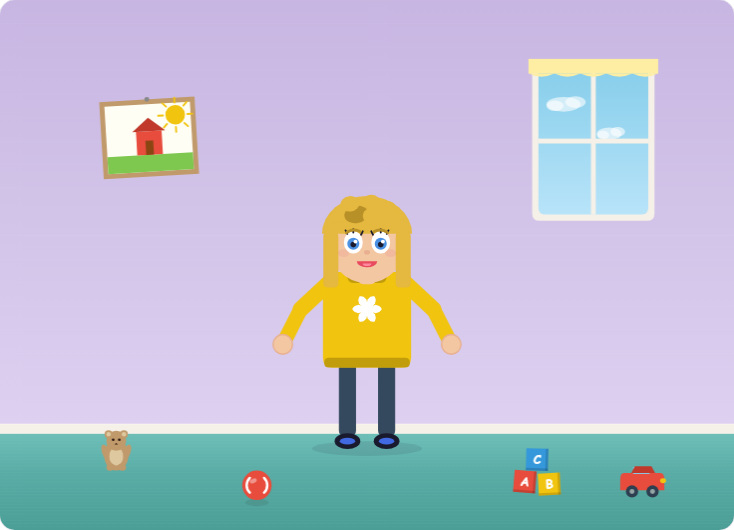
Understanding Muscle Tone
An interactive slider exploring how muscle tone affects posture and movement - from low tone (hypotonia) to high tone (hypertonia).
Left Like The Right
Is the left doing what the right is doing? A song about what a physio looks for in a child's posture, where symmetry matters more than a perfect way to stand.
What does a physio look for in a child's posture?
What a physio checks in a child's posture - head tilt, uneven shoulders, hip drop and spinal curve - plus why children struggle to settle after school.